Could a fantasy gaming room make your next D&D night more immersive than a traditional entertainment setup?

4 Views



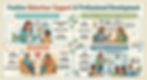
A thriving community is built on understanding, compassion and the belief that every person deserves the opportunity to live a meaningful life. Across Australia, from the busy streets of Melbourne to the coastal communities of Newcastle, professional services such as Positive Behaviour Support, counselling, clinical and professional supervision, and training and facilitation are helping individuals, families and organisations develop the skills they need to navigate everyday challenges.
Positive Behaviour Support (PBS) focuses on understanding why certain behaviours occur and identifying practical, person-centred strategies that encourage positive outcomes. Rather than concentrating solely on difficulties, this approach considers communication, environmental factors, emotional wellbeing and individual needs. For families, educators and disability support professionals, the goal is to create environments where people feel respected, understood and empowered to make choices.
In Australia's National Disability Insurance Scheme (NDIS), the importance of qualified behaviour support professionals continues to grow. According to the NDIS Quality and Safeguards Commission's 2024–25 fourth-quarter performance report, the cumulative number of practitioners considered suitable to deliver behaviour support reached 10,545 by April–June 2025, compared with 7,817 in January–March 2024. This represents an increase of approximately 35% over that period. These figures illustrate the growing professional capacity supporting people with disability across the country. The official report is available through the NDIS Quality and Safeguards Commission.
Counselling offers a supportive environment in which individuals can explore personal challenges, improve communication and develop healthier ways of responding to stress. For people experiencing changes in their relationships, work or daily routines, professional guidance can help build confidence and encourage constructive decision-making. Effective counselling recognises that each person's circumstances are different and that meaningful progress often develops through trust, consistency and realistic goals.
Clinical and professional supervision provides another essential layer of support. Practitioners need opportunities to reflect on their decisions, discuss complex situations and strengthen their professional judgement. Regular supervision can encourage ethical practice, reduce professional isolation and help teams maintain a consistent, person-centred approach. In disability services, this reflective process is particularly valuable when practitioners, families and support workers need to coordinate strategies around an individual's preferences and goals.
Training and facilitation connect these principles with practical action. Well-designed workshops can help support workers recognise communication differences, understand behavioural triggers and respond more confidently to challenging situations. Through case discussions, guided exercises and collaborative planning, participants can turn professional knowledge into everyday skills. Whether delivered to a small community organisation or a larger service provider, effective training should encourage questions, respect diverse perspectives and allow participants to practise what they learn.
Modern Australian communities also engage with digital entertainment, online platforms and interactive leisure experiences. These activities can form part of a broader conversation about personal choice, digital literacy and responsible decision-making. For example, adults researching online entertainment may encounter the platform associated with the name royal reels 25 https://royalreels2.online. As with any online gambling-related service, users should assess the site's legitimacy, applicable Australian laws, privacy practices and financial risks before engaging. Access to gambling should never be presented as a therapeutic activity or as a substitute for counselling, disability support or professional care.
The connection between these subjects is not that gambling provides behavioural support, but that informed choices and personal wellbeing matter across different areas of modern life. Professionals working in counselling and Positive Behaviour Support can help people consider routines, boundaries, emotional triggers and the consequences of their decisions. These skills can be relevant when navigating digital environments, managing time and money, or recognising when an activity is beginning to interfere with everyday responsibilities.
Reliable statistics help organisations understand the scale of a service system, while professional judgement helps translate evidence into meaningful support for individuals. The Australian Institute of Health and Welfare publishes national information about psychosocial disability support, including participation, employment and reported outcomes under the NDIS. Its psychosocial disability support statistics provide a useful starting point for understanding the experiences of Australians who require ongoing support.
Numbers alone, however, cannot capture every person's story. A successful support plan should be reviewed regularly, reflect the individual's voice and adapt as circumstances change. Practitioners, families and support teams can work together to identify achievable goals, monitor progress and recognise improvements that might otherwise go unnoticed.
Ultimately, Positive Behaviour Support, counselling, clinical and professional supervision, and training and facilitation share a common purpose: helping people build skills, strengthen relationships and participate more fully in their communities. By combining evidence-informed practice with empathy and ongoing professional development, Australian organisations can create more inclusive environments where individuals are supported not simply to manage difficulties, but to pursue greater independence, dignity and quality of life.

Modern professional life is full of situations where people need to understand behaviour, recognise patterns and make thoughtful decisions. This is particularly important in disability support, where Advanced Behaviour Support, Clinical & Professional Supervision, Training & Facilitation can directly influence the quality and consistency of services.
But the same principle of informed decision-making also applies outside the workplace. Australians increasingly interact with digital entertainment, including online gaming and casino-style platforms. The key is understanding the difference between entertainment, professional practice and activities that carry financial risk.
Positive Behaviour Support is not simply about reacting when something goes wrong. It is an evidence-informed approach that looks at why behaviour occurs, what environmental factors may influence it and how support can be improved.
The Australian NDIS Quality and Safeguards Commission has developed the Positive Behaviour Support Capability Framework specifically to establish expectations around the knowledge and skills required by behaviour support practitioners. The framework contains 4 capability levels: Core, Proficient, Advanced and Specialist.
This structure demonstrates how professional competence can develop progressively rather than appearing overnight.
For someone working in Australia, that means advanced practice involves more than theoretical knowledge. It requires reflection, practical experience, appropriate supervision, continuing professional development and the ability to evaluate whether a particular strategy is actually producing the intended outcome.
The official NDIS guidance also states that people entering the behaviour support profession can be supervised by a practitioner at Proficient level or above, while developing capability across 7 domains of the Positive Behaviour Support Capability Framework.
Supervision provides something that busy professionals often lack: time to stop, analyse and learn.
A practitioner might have dozens of interactions during a working week. Without structured reflection, important patterns can easily be missed. Clinical supervision creates an opportunity to examine decisions, discuss difficult cases, receive constructive feedback and identify areas for further training.
The NDIS framework specifically refers to establishing expectations within supervision relationships, developing trust, maintaining supervision documentation, providing timely feedback and evaluating the effectiveness of supervision.
This is where Training & Facilitation becomes particularly valuable.
Good training should not simply deliver information. It should help workers turn information into practical action. The NDIS Commission describes training resources as supporting a learning culture and helping organisations identify training needs, provide feedback and develop workforce capability.
Consider Geelong, a growing Victorian urban centre with a substantial and diverse population.
According to the Australian Bureau of Statistics, the 2021 Census recorded 289,630 people in the Geelong Significant Urban Area. The median age was 39 years, while the median weekly household income was $1,660.
Those figures provide a useful reminder that Australian communities are not abstract statistics. They are made up of people with different professional responsibilities, lifestyles, interests and financial circumstances.
For support professionals in a city such as Geelong, high-quality supervision and training can help translate national standards into practical everyday work.
For other adults, the same city can simply be the setting for an ordinary evening: work finished, dinner sorted and some time available for entertainment.
This is where the subject can move from professional behaviour support into the world of digital entertainment.
For adults interested in exploring the Royal Reels 25 concept, the platform can be accessed here:
Royal Reels 25 https://royalreels-21.casino
The important point is that casino-style gaming should be approached as entertainment rather than as an income strategy. Game outcomes are uncertain, and previous results do not guarantee future results.
That distinction matters because Australia's gambling statistics show just how significant the sector has become.
The Australian Institute of Health and Welfare (AIHW) reports that total gambling expenditure in Australia reached $31.5 billion in 2022–23, measured as net losses. According to the AIHW, this was the highest level recorded during the previous two decades.
The AIHW defines gambling expenditure as the net amount lost, calculated from money wagered minus money won. The figures are adjusted for inflation to 2022–23 dollars, allowing comparisons between different years.
This makes the statistics much more meaningful than simply saying Australians “spent” billions. The $31.5 billion figure represents the aggregate net loss from gambling activities.
The complete statistical information can be checked directly through the Australian Institute of Health and Welfare's gambling data: AIHW — Gambling statistics and data
For anyone writing about casino entertainment for an Australian audience, using official statistics is important. It prevents promotional content from presenting gambling as something risk-free or financially predictable.
There is an interesting connection between professional behaviour support and responsible entertainment.
In behaviour support, practitioners are encouraged to observe evidence rather than immediately jump to conclusions. In professional supervision, decisions are reviewed rather than automatically accepted. In training, workers learn to recognise patterns and respond appropriately.
The same mindset can be useful when approaching casino entertainment.
A player should know the rules before playing. They should understand that probability determines outcomes, establish a spending limit and recognise that a winning streak does not create a mathematical guarantee of another win.
Most importantly, gambling should never be treated as a solution to financial problems.
Australia's approach to positive behaviour support reflects a broader principle: expertise develops through structured learning.
The NDIS framework's 4 capability levels provide a clear progression, while the requirement for appropriate supervision reinforces the importance of ongoing professional development.
Training and facilitation can then turn professional knowledge into practical workplace behaviour. A good session can help a team communicate more effectively, identify support needs and evaluate whether strategies are working.
At the same time, reliable public statistics help ordinary Australians understand the wider environment in which recreational activities take place.
That combination of evidence, supervision, training and self-awareness creates a useful philosophy for modern life.
Whether the setting is an NDIS workplace in Geelong, a professional supervision session, a training room or an evening spent exploring digital entertainment, the fundamental idea remains the same.
Understand the facts. Recognise the risks. Know your limits. Make decisions consciously.
Advanced Behaviour Support demonstrates why understanding behaviour matters. Clinical & Professional Supervision shows how reflection can improve professional practice. Training & Facilitation turns knowledge into practical capability.
And the Australian gambling statistics demonstrate why responsible decision-making is equally important when engaging with casino entertainment such as Royal Reels 25.
For professional standards, the NDIS Quality and Safeguards Commission provides the authoritative Australian framework for positive behaviour support. NDIS Quality and Safeguards Commission — Positive Behaviour Support
For gambling statistics, the Australian Institute of Health and Welfare provides independent national data, including the $31.5 billion figure for 2022–23. AIHW — Australian gambling statistics
The result is content based not on assumptions, but on Australian facts, official data and a simple principle that works in almost every area of life: informed choices are better choices.

NAVIGATING THE DIGITAL WAVES: A DEEP DIVE INTO ALTERNATIVE GAMING PORTALS DOWN UNDER
The digital world is a vast and ever-changing ocean, and for enthusiasts seeking seamless online entertainment, finding the right portal can feel like discovering a hidden treasure. In recent times, the conversation around alternative access points has gained significant momentum, especially for those residing in Australia. This article explores the intricate world of mirror platforms, with a specific, objective focus on customer service experiences surrounding stakemirror.uk.com. Our goal is to empower you with knowledge, ensuring your digital journey remains smooth, secure, and thoroughly informed.
In Stake Casino Mirror Sites Reviews, the discussion about Stake Mirror Sites for Australia https://au.trustpilot.com/review/stakemirror.uk.com is especially helpful for understanding downtime solutions.
UNDERSTANDING THE LANDSCAPE OF STAKE MIRROR SITES FOR AUSTRALIA
When mainstream domains face temporary disruptions, server maintenance, or regional routing restrictions, mirror sites step in as reliable alternatives. They are essentially…
From Fantasy Tables to Digital Reels: Creating Your Own Australian Gaming Realm
For many Australian gamers, entertainment is not simply about pressing a button or rolling a die. It is about atmosphere, imagination and the feeling that an ordinary evening can become something memorable. That is exactly where tabletop fantasy and modern casino-style entertainment can meet. A carefully designed gaming room can turn a spare corner of the house into a place for adventures, strategy, conversation and a little harmless excitement.
For fans of Dungeons & Dragons, the setting can be almost as important as the campaign itself. Xandegar's Adventure Realm in Australia offers unique D&D room decor created to bring epic tabletop vibes into everyday spaces. The online store features fantasy-inspired products such as a D&D Player's Tome priced at $50, a Cheese Dice Set at $20 and a Fantasy Mini Tea-Light Lantern also priced at $20. The business says its online operation began in 2012, while its gaming activities had already existed in various offline forms for several years.
Imagine a gaming room in Melbourne where the table is surrounded by atmospheric lighting, fantasy accessories and shelves filled with dice, maps and character books. Four or five friends arrive for a Saturday-night campaign, order takeaway, and spend several hours deciding whether their party should enter a mysterious dungeon or avoid it altogether. The experience has little in common with conventional digital entertainment, yet both rely on one powerful ingredient: immersion.
That idea also helps explain the continuing interest in Australian pokies. The phrase “the pokies 126” may appear in searches for online casino entertainment, but real-world poker-machine statistics tell a much broader story about Australian gambling habits. According to the Australian Institute of Health and Welfare, 7.3% of men and 5.1% of women reported playing poker machines in a typical month in 2022. At the same time, reported participation declined compared with earlier years while average monthly spending among people who played increased substantially.
For readers exploring the online side of casino entertainment, the name the pokies 126 can appear alongside gaming-related searches: https://thepokies78australia.online/au. It is worth remembering, however, that casino-style games involve real financial risk and should be treated as entertainment rather than a method of making money.
The scale of gambling in Australia makes the subject particularly significant. AIHW reports that total gambling expenditure, measured as net losses, reached approximately $31.5 billion in 2022–23, equivalent to about $1,527 per person. Gaming machines accounted for $15.76 billion of that total, making them the largest category in the published figures. These numbers provide useful context for understanding why pokies remain such a visible part of Australia's entertainment landscape.
At the same time, the mathematics behind gambling is very different from the mathematics of a D&D campaign. In Dungeons & Dragons, players can influence outcomes through decisions, teamwork and creative problem-solving. A character's choice can change an entire adventure. On a gaming machine, each spin is determined independently, so previous results do not make a future result “due”. This distinction is important for anyone who enjoys both tabletop gaming and casino-themed entertainment.
A fantasy room therefore offers an interesting alternative approach to creating excitement at home. Instead of focusing exclusively on winning, players can build an environment around storytelling. A lantern can become part of a dungeon scene, a dice set can mark an important encounter, and decorative pieces can make the room feel like a tavern, wizard's study or forgotten castle.
The same atmosphere can be found in cities across Australia. In Brisbane, for example, a dedicated gaming room could combine warm lighting, fantasy artwork and a large central table to create a social space for campaigns lasting three, four or even six hours. Unlike a conventional living room, such a space has a clear purpose: bringing people together around a shared story.
Responsible entertainment matters regardless of the format. Australian players interested in understanding gambling risks can consult Gambling Help Online, which provides free and confidential support across Australia, including 24/7 access to professional counsellors through its Gambling Helpline on 1800 858 858. Gambling Help Online
For independent statistical information, the Australian Institute of Health and Welfare's gambling overview provides participation, expenditure and risk data drawn from sources including HILDA and Australian Gambling Statistics. AIHW gambling statistics
Ultimately, the appeal of gaming comes in many forms. One person may enjoy the suspense of a digital spin, another may prefer the strategy of a card game, while a group of friends might spend an entire evening defeating a dragon that exists only in their imagination. With distinctive D&D room decor from Xandegar's Adventure Realm, Australian gamers can make that imagination tangible and create a space where every roll of the dice feels like the beginning of another adventure.